Comité Científico
Conoce al comité científico internacional evaluador de la sección expoBAC de BAC Barcelona 2025. El comité cuenta con 14 miembros con especializaciones en diversas áreas de la Biotecnología como son la biotecnología marina, vegetal, sanitaria industrial y ambiental, así como la bioinformática o la viro/microbiología.
Según sus áreas de especialización se encargarán de evaluar los trabajos presentados y aceptados por la sección expoBAC del congreso BAC Málaga 2025.
Eliana Carolina Bianucci Ovando
Agro y ambiental
Mi investigación se centra en los mecanismos fisiológicos, bioquímicos y moleculares
implicados en las respuestas de las plantas al estrés abiótico, con especial énfasis en la
señalización redox, el metabolismo antioxidante y las interacciones planta-microorganismo.
Mi trabajo integra biología redox, anatomía radicular, homeostasis de nutrientes y expresión
génica para comprender cómo cultivos como cacahuete, maíz y soja, así como especies de
Brassicaceae, responden frente a estreses abióticos.
Una contribución central de mi investigación ha sido caracterizar cómo las bacterias
promotoras del crecimiento vegetal (PGPB) y los microorganismos simbióticos modulan la
homeostasis redox y la tolerancia al estrés, incluyendo efectos dependientes de la cepa sobre
el metabolismo del glutatión y la señalización por ROS. Más recientemente, he extendido este
marco a agroecosistemas mediterráneos, desarrollando estrategias biotecnológicas basadas en
microorganismos halotolerantes para mejorar la resiliencia de los cultivos expuestos a
salinidad, sequía, metales y metaloides, y escenarios de estrés combinado.
A lo largo de una trayectoria científica desarrollada entre Argentina y España, he liderado cinco
proyectos competitivos y participado en proyectos europeos H2020 y Horizon Europe,
contribuyendo al desarrollo de soluciones sostenibles basadas en el microbioma para la
agricultura bajo escenarios de cambio climático.
Jordi Saldo Periago
Agro y ambiental
Jordi Saldo Periago és professor titular de la Universitat Autònoma de Barcelona (UAB), al Departament de Ciència Animal i dels Aliments, i coordinador del Doctorat en Ciència dels Aliments des de 2022. Desenvolupa activitat docent en els graus de Ciència i Tecnologia dels Aliments, Veterinària i Microbiologia, així com en diversos programes de màster en l’àmbit de la qualitat, la seguretat i la tecnologia alimentària.
La seva trajectòria investigadora se centra en les noves tecnologies de processat d’aliments, l’aplicació de metodologies avançades d’anàlisi de dades i la valorització de subproductes agroalimentaris, amb especial atenció als compostos bioactius i als ingredients funcionals. El seu treball recent destaca per l’ús de tècniques espectroscòpiques i anàlisis multivariants per estudiar els efectes del processat sobre la qualitat, el valor nutricional i la funcionalitat dels aliments.
Ha dirigit nombroses tesis doctorals, participa regularment com a avaluador de projectes i revistes científiques, i col·labora activament amb la indústria agroalimentària en projectes d’R+D i innovació orientats al desenvolupament d’aliments funcionalment millorats basats en evidència científica.
Antonio José Trujillo Mesa
Agro y ambiental
Catedrático de Universidad en el área de Tecnología de los Alimentos en la Universitat Autònoma de Barcelona (UAB), soy licenciado y doctor en Veterinaria (premio extraordinario de doctorado). Mi trayectoria investigadora, desarrollada durante más de 25 años en centros del área de la UAB y actualmente como investigador de CIRTTA-UAB, se ha centrado en la tecnología de la leche y productos lácteos, abarcando tanto tratamientos tradicionales como tecnologías emergentes. En los últimos 15 años he liderado una línea pionera en la aplicación de la homogeneización a ultra alta presión (UHPH) como alternativa a los tratamientos térmicos, contribuyendo al desarrollo de esta tecnología y a la obtención de patentes, con aplicaciones en productos lácteos y otros alimentos líquidos. Más recientemente, he impulsado su uso en la obtención de emulsiones submicrónicas para la protección y liberación de compuestos bioactivos, y la modificación de proteínas alternativas para la mejora de su tecnofuncionalidad. He participado en más de 40 proyectos competitivos y 50 contratos con empresas, soy autor de más de 150 publicaciones (115 en revistas SCI, con un elevado porcentaje en Q1) y presento un índice h de 42. He dirigido 16 tesis doctorales en la última década y mantengo una intensa actividad docente y de transferencia.
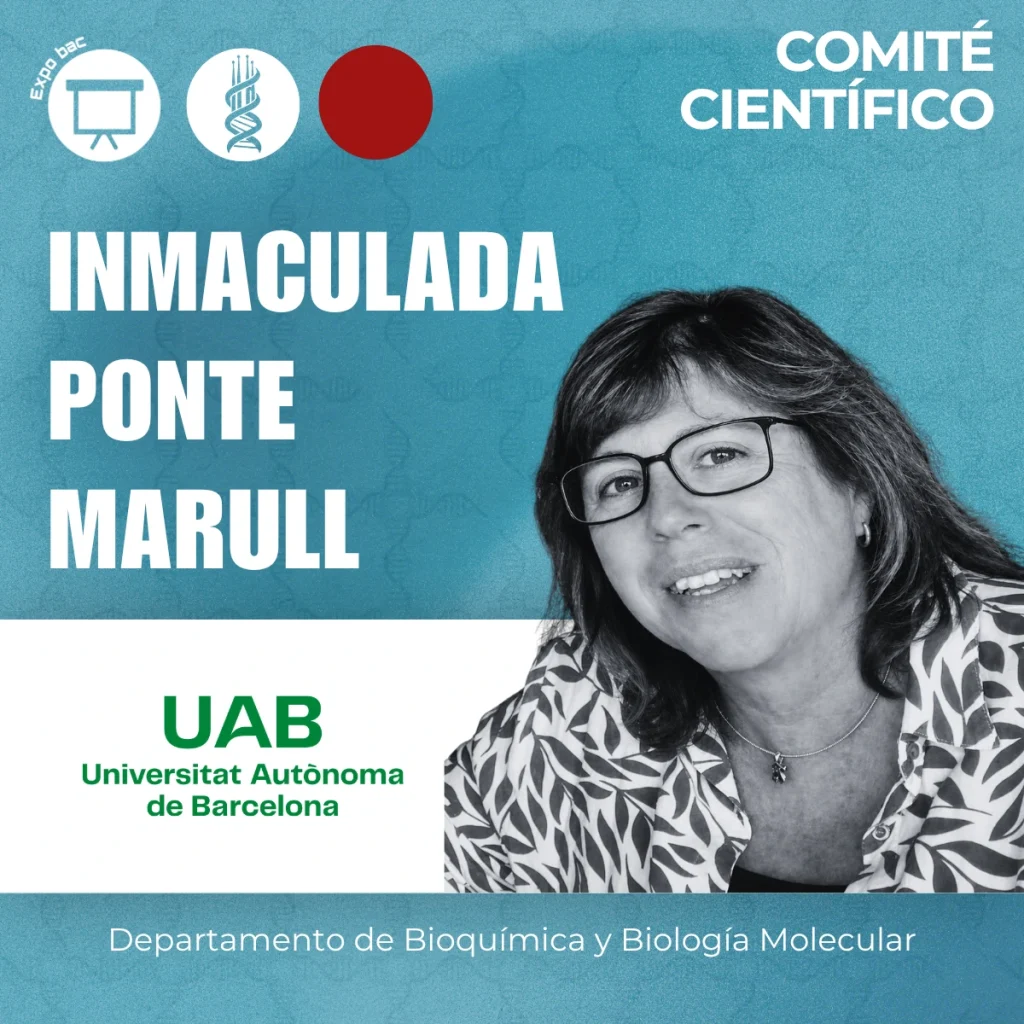
Inmaculada Ponte Marull
Biomedicina
Llicenciada en Biologia i doctora per la Universitat de Barcelona-CSIC, és professora titular al Departament de Bioquímica i Biologia Molecular de la Universitat Autònoma de Barcelona. Va completar la seva formació científica en centres de recerca a Basilea (FMI) i Tolosa (CNRS). La seva recerca se centra en l’estudi de la histona H1 clau en l’organització de la cromatina i en la regulació de l’expressió gènica mitjançant mecanisme epigenètics. Al llarg de la seva trajectòria ha contribuït a aprofundir en el coneixement de les variants dels subtipus de la histona H1 en diferents aspectes com la seva estructura proteica, la diferenciació funcional, el seu model evolutiu, el mecanisme de regulació de la expressió dels diferents subtipus i la seva relació en patologies humanes com el càncer. La seva activitat investigadora es reflecteix en una producció científica continuada i en la seva participació en mes de 15 projectes competitius. Paral·lelament, ha mantingut una implicació destacada en la formació (docència de grau, màster i doctorat) i en la gestió acadèmica, amb càrrecs rellevants com el de vicedegana de postgrau i relacions internacionals de la Facultat de Biociències i, més recentment, com a directora de l’Escola de Doctorat de la UAB.
Margarita Julià Sapé
Biomedicina
Mª Margarita Julià Sapé es profesora agregada en el Departamento de Bioquímica y Biología Molecular de la Universitat Autònoma de Barcelona (UAB), investigadora del Instituto de Biotecnología y de Biomedicina (IBB) y miembro del CIBER-BBN. Lidera el MIDAlab (Metabolomics and Imaging Data Lab) en el IBB, donde su investigación aplica el aprendizaje automático y la ciencia de datos a datos de metabolómica e imagen —principalmente espectroscopia de resonancia magnética— para identificar biomarcadores de tumores cerebrales. Sus proyectos actuales se centran en el desarrollo de herramientas de soporte a la decisión clínica y en la exploración de los límites de compatibilidad de datos en estudios de aprendizaje automático para gliomas. Desarrolla su actividad docente principalmente en los grados de Bioquímica y de Biotecnología de la UAB y coordina el programa de doctorado interuniversitario en Bioinformática, una iniciativa catalana única que involucra a ocho universidades y a la asociación Bioinformatics Barcelona (BIB). Actualmente, ejerce como secretaria del comité del Iberian Chapter de la International Society for Magnetic Resonance in Medicine (ISMRM)
Dr. Francesc Valero
Biotecnología Industrial
El Dr. Francisco Valero Barranco es catedrático de Ingeniería Química en el Departamento de Ingeniería Química, Biológica y Ambiental de la Universitat Autònoma de Barcelona. Su carrera investigadora se ha centrado en la Ingeniería Bioquímica, especialmente en los campos de la ingeniería de bioprocesos, la producción de proteínas recombinantes en la fábrica celular Pichia pastoris, la monitorización, modelado y control de bioprocesos, y la biocatálisis aplicada.
Ha codirigido el Grupo de Investigación en Ingeniería de Bioprocesos y Biocatalización Aplicada (ENG4BIO) y cuenta con una amplia experiencia como gestor de proyectos, habiendo liderado 50 proyectos públicos y privados. Ha publicado más de 140 artículos científicos en revistas indexadas, con un índice H de 38, y ha dirigido más de 25 tesis doctorales en el ámbito de la biotecnología. Actualmente, es el secretario de la Sociedad Española de Biotecnología (SEBiot) y miembro de la EFB (Federación Europea de Biotecnología) y de la PDA (Parenteral Drug Association).
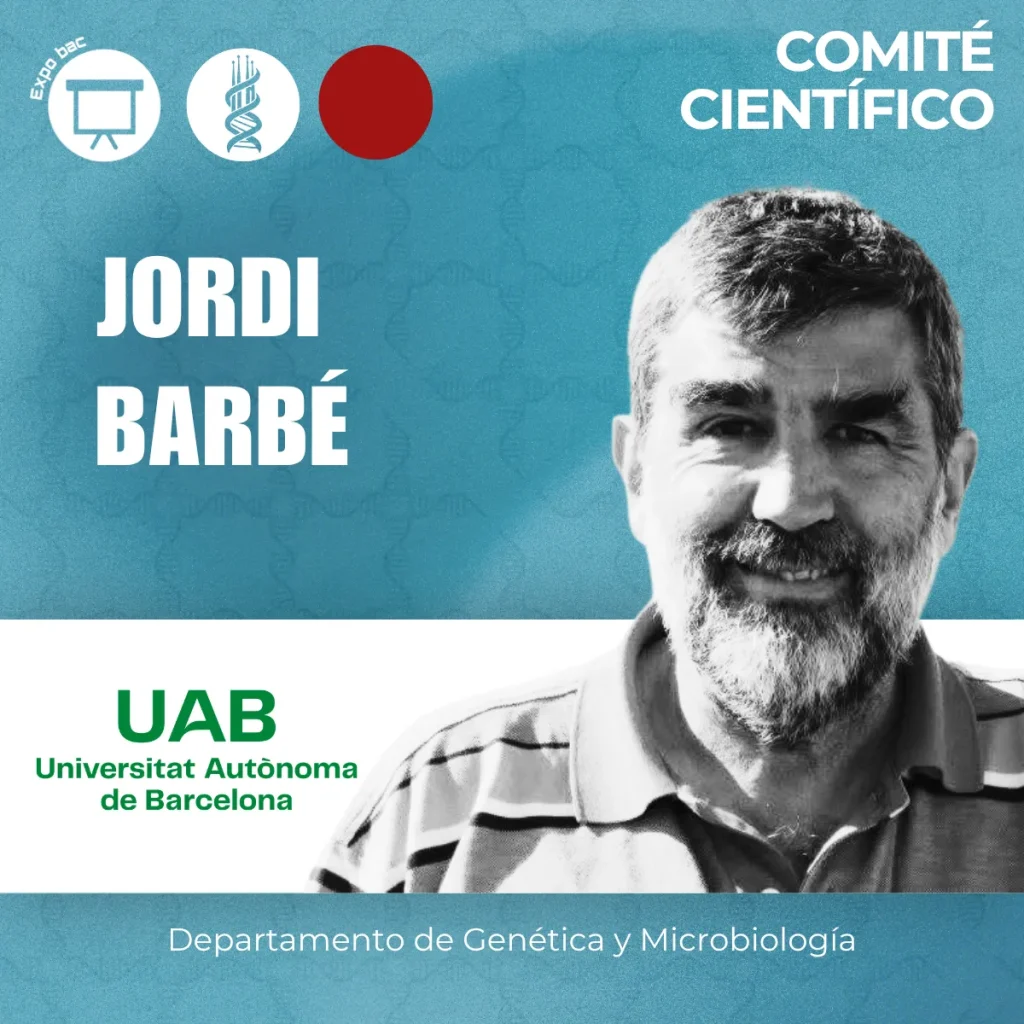
Dr. Jordi Barbé
Microbiología y Virología
Mis líneas de investigación han sido fundamentalmente dos. Por un lado el análisis filogenético de los
mecanismos de reparación del DNA en bacterias especialmente sobre el sistema de reparación de
emergencia (conocido como SOS) y por otro la captación de hierro por las células de bacterias
patógenas y la conexión con sus procesos infectivos. En la primera hemos constatado la variabilidad de
la composición génica del regulón SOS y la relación existente entre los diferentes operadores que lo
controlan. Hemos demostrado la dinámica de expansión del sistema SOS y que su proteína represora
proviene en muchos casos de un represor de genes fágicos. También hemos evidenciado que este
sistema controla la movilización de los elementos genéticos conocidos como integrones que son una de
las bases sobre la que se ha generado la transferencia genética lateral de la resistencia a los
antibióticos. Con respecto los procesos de captación de hierro hemos determinado que muchas cepas
bacterianas patógenas tienen diversas estrategias que coexisten en sus células lo que les permite obviar
los mecanismos de defensa del huésped. Esta cuestión es muy relevante para el diseño de sistemas
vacunales basados en la inmunogenicidad de las proteínas captadores de hierro de las envueltas
bacterianas
Olga Sánchez Martínez
Microbiología y Virología
Catedrática de Microbiología (2024) y Doctora por la Universitat Autònoma de Barcelona (1996, Premio Extraordinario de Doctorado), está especializada en ecología microbiana y microbiología ambiental. A lo largo de una trayectoria de 30 años, ha liderado y colaborado en proyectos de investigación competitivos, tanto nacionales como internacionales, centrados en la biorremediación de contaminantes y en el estudio de la estructura y función de las comunidades microbianas en entornos naturales.
Ha sido pionera en la aplicación de microorganismos fotótrofos en sistemas de ingeniería para la eliminación de contaminantes, obteniendo financiación tanto del Ministerio español como de la Comisión Europea. Su trabajo ha permitido avanzar en la integración de herramientas moleculares y dependientes de cultivo para caracterizar y optimizar comunidades microbianas en biorreactores y entornos contaminados. Desde 2007, también ha contribuido a iniciativas interdisciplinarias en microbiología aplicada, incluyendo el desarrollo de biosensores para la monitorización ambiental e industrial. Paralelamente, ha consolidado una sólida línea de investigación en ecología microbiana marina a través de colaboraciones continuas con el ICM-CSIC y la KAUST, liderando proyectos europeos e internacionales sobre la biorremediación de mercurio y la dinámica de las comunidades microbianas.
Su producción científica incluye 92 publicaciones y la supervisión de 113 estudiantes. Forma parte del comité editorial de la revista Scientific Reports y evalúa regularmente propuestas de investigación a nivel nacional e internacional.
Marc Bravo Bravo
Microbiología y Virología
Marc Bravo es microbiólogo e investigador postdoctoral en el IRTA-CReSA, especializado en resistencia a los antimicrobianos, con una trayectoria científica desarrollada en la intersección entre la microbiología molecular, la genómica, la bioinformática y la epidemiología. Sus líneas de investigación se han centrado en comprender los mecanismos bacterianos asociados a la resistencia, la adaptación y la patogenicidad, así como en aplicar este conocimiento al estudio y la vigilancia de la resistencia antimicrobiana desde una perspectiva One Health. Actualmente, su trabajo aborda la integración de datos microbiológicos, genómicos y epidemiológicos para mejorar la detección, monitorización y control de la resistencia a los antimicrobianos en distintos reservorios y contextos. Su actividad investigadora combina enfoques experimentales y computacionales, y se desarrolla en el marco de proyectos colaborativos nacionales y europeos orientados a generar conocimiento útil para la salud pública, la salud animal y el medio ambiente.
Arturo Blázquez Soro
Agro y ambiental
Arturo B. Soro es profesor lector Serra Húnter en la Universitat Autònoma de Barcelona, donde desarrolla actividad docente, investigadora y de transferencia en el ámbito de la ciencia y tecnología de los alimentos y de la biotecnología alimentaria. Es graduado en Ciencia y Tecnología de los Alimentos por la Universidad de Zaragoza, máster en Calidad, Seguridad y Tecnología Alimentaria (Premio Extraordinario) y doctor en Veterinary Public Health por la University College Dublin. Su trayectoria científica se ha desarrollado en entornos internacionales como Irlanda, Bélgica y Austria, con experiencia como investigador predoctoral, postdoctoral e investigador independiente en centros de referencia.
Su línea de investigación se centra en el desarrollo y aplicación de tecnologías innovadoras y sostenibles para mejorar la seguridad, calidad y funcionalidad de los alimentos, con especial énfasis en tecnologías físicas emergentes (como UV-LED, ultrasonidos o plasma frío), control de patógenos alimentarios y evaluación del impacto de estas tecnologías sobre la calidad y aceptación del producto. Ha participado en numerosos proyectos competitivos nacionales y europeos, así como en contratos de investigación con la industria y administraciones públicas. Es autor de más de 20 artículos científicos en revistas internacionales indexadas, varios como primer autor, y colabora activamente en iniciativas alineadas con los objetivos de sostenibilidad y la Agenda 2030.
François Chauvigné
Biotecnologia Marina
Dr. François Chauvigné earned a PhD in Biology at University of Rennes I, studying
trout embryonic muscle development. After a postdoc at INSERM on phthalate toxicity
in rats, he became a Marie Curie fellow at the IRTA–ICM–CSIC joint lab in Barcelona.
He later held a Juan de la Cierva fellowship there. In 2013, he joined the University of
Bergen to study aquaporins in Atlantic salmon, and in 2016 obtained a Ramón y Cajal
position at IRTA. Since 2020, he is Tenured Scientist at CSIC in the “Molecular
Physiology and Biotechnology of Marine Organisms” group at ICM-CSIC/IBB-UAB.
His research focuses on molecular and endocrine regulation of spermatogenesis in fish,
especially Senegalese sole, developing tools (recombinant hormones, ELISAs) and
therapies for reproductive dysfunctions. He has also collaborated with industry (e.g.,
Stolt Seafarm, Sea8). He has supervised various PhD and master students, contributes to
teaching in aquaculture programs, and reviews for international journals.
Joan Cerdà
Biotecnologia Marina
Dr. Joan Cerdà (1965, Barcelona) obtained the PhD in Physiology and Biochemistry from the
University of Barcelona (Spain) in 1993, and has been a researcher at the Whitney Laboratory
for Marine Bioscience (University of Florida, USA), the German Cancer Research Center
(Heidelberg, Germany), and the Institute of Agrifood Research and Technology (IRTA, Spain).
He is currently Research Scientist at the Spanish National Research Council (CSIC), and his
laboratory is currently associated to the Institute of Biotechnology and Biomedicine (IBB) from
the Universitat Autònoma de Barcelona (UAB, Spain). His major research interests are the
evolutionary and developmental physiology of aquaporins, particularly in female and male
gametes, the molecular basis of spermiogenesis and sperm maturation, and the development of
new biotechnological methods for long-term cell preservation. Dr. Cerdà has been the
coordinator or principal investigator of more than 20 national and international research
projects, and has participated in different contracts with the industry. He has published 130 SCI
peer-reviewed articles and 14 book chapters, and is inventor of one patent.
Esther Julián Gómez
Microbiología y Virología
Esther Julian obtained her BSc in Biology from the University of Barcelona, and her MSc in Microbiology and PhD in Biological Sciences from the Autonomous University of Barcelona. She then joined the Immunology Department at the University of Stockholm where she did her postdoctoral training. In December 2009, Esther Julián started as an Associate Professor and Principal Investigator of the Mycobacteriology Research Laboratory in the Genetics and Microbiology Department at the Autonomous University of Barcelona. From June 2023 she is Full Professor at the same Department. Her main scientific interests are in the field of mycobacteriology, in particular, the use of mycobacteria as immunotherapy agents. She is expert in mycobacterial immunology and host–pathogen interactions, with a strong focus on the use of mycobacteria and mycobacterial components as immunotherapeutic tools in cancer and infectious diseases. Her current research integrates structural biology, molecular microbiology, and immunology to decipher how specific cell-wall components and surface-exposed molecules of mycobacteria shape innate and adaptive immune responses
Nerea Roher Armentia
Biotecnología Marina
Dr. Nerea Roher is a Full Professor at the Universitat Autònoma de Barcelona (UAB) specializing in the immunology of aquatic organisms. She holds a Ph.D. in Biochemistry from UAB and has extensive expertise in immunology and microbiology, with a strong focus on antiviral vaccine development for aquatic species. Her research also addresses how environmental factors influence immune function. Dr.Roher leads innovative research at the interface of biotechnology and fish health, with a clear emphasis on translational outcomes for the aquaculture industry.
Iñigo Lasa Uzcudun
Microbiología y Virología
"I completed my undergraduate studies in Biological Sciences at the University of
Navarra in 1988 and earned a PhD in Microbiology from the Center for Molecular
Biology (CSIC-UAM) at the Autonomous University of Madrid in 1992. I
subsequently spent three years conducting research in the laboratory of Professor
Pascale Cossart at the Pasteur Institute, focusing on the genetics of Listeria
monocytogenes actin-based motility. In 1997, I returned to Spain to join the Public
University of Navarra (UPNA) in Pamplona as a professor of Microbiology. The
following year, I was appointed Associate Professor and established my own
laboratory at the Center for Agrobiotechnology, where my research focused on the
genetics of bacterial biofilm formation. From 2010 to 2013, I served as Director of the
Center. In 2008, I became a Full Professor of Microbiology at UPNA, and between
2015 and 2022, I was Director of Navarrabiomed, a newly established biomedical
research institute in Pamplona. As a principal investigator, I have led nine consecutive
research projects funded by the Spanish Ministry of Economy, Industry, and
Competitiveness, as well as five grants from the European Union’s 6th, 7th, and
Horizon Europe Framework Programmes. I have supervised 20 doctoral students and
12 postdoctoral researchers, several of whom now lead their own research groups. My
laboratory is dedicated to studying the genetic mechanisms underlying biofilm
formation in pathogenic bacteria. Currently, our work focuses on the global function
of the two-component sensory network in Staphylococcus aureus, transcriptional gene
regulation through overlapping mRNAs of adjacent genes, and the development of
recombinant phages for therapeutic applications. Among our major scientific
contributions are: (i) the identification of a family of proteins, termed Bap, that
promote biofilm formation in various bacterial species through amyloid
conformations; (ii) the demonstration that the two-component sensory system is
dispensable for S. aureus growth under laboratory conditions; (iii) the discovery of a
transcriptional control mechanism based on overlapping mRNAs processed by RNase
III; and (iv) the identification of a novel bacterial gene organization, which we have
termed the non-contiguous operon. Throughout my career, I have been deeply
committed to translating scientific discoveries into tangible benefits for society. In
2011, I co-founded RECOMBINA S.L. (Pamplona), a biotechnology company
specialising in customised genetic engineering services and the development of
attenuated microorganisms for veterinary vaccine production."